The phrase ‘being trauma informed’ seems to be well used today. Lots of schools that I’ve worked with over the years would call themselves trauma informed and in meetings are keen to express that. When I started BraveHeart several years ago now my aim, ambitious as it was, was to raise the basic awareness of the impact of trauma on children and young people in a hope to change practice. Now years on, most schools have had attachment or trauma training, some within a setting may have fully bought into a more trauma informed approach and many are practiced in observing the impacts of early trauma on children.
However, I feel there is still a long way to go in changing practice to be more flexible in how we enable children and young people to settle in our educational settings. As you will have heard me say before, if you’ve followed my work at all, it takes a paradigm shift in thinking to be able to, not just be informed, but to transform our practices.
When I speak to school staff and they tell me how trauma informed they are, but then continue to use behaviour modification techniques, I know they have not made the big leap to changing practice. When we are searching to make consequences ‘natural’ by imposing a consequence that we have fabricated, we are not changing our practice. Hear me right here, there are natural consequences and there are boundaries and structures that need to be there to help children and young people feel safe, but when we think that our imposed missing of playtime or detentions will change their behaviour then we have not understood the impact of their trauma.
I did a series in my blogs recently on unconditional approaches to children and young people. This was regarding parenting following the Alfie Kohn book – Unconditional parenting, but the principles are the same in our educational settings. Until we start to be proactive and help children manage their emotions and sensory needs that lead to disruptive behaviours, we will not make our settings accessible to traumatised children. We must change our approaches radically before we will see children and young people able to feel safe enough to even come to school sometimes.
The BBC states that there is a significant, well-documented rise in school avoidance in the UK, frequently referred to as Emotionally Based School Avoidance (EBSA). Persistent absence has doubled since the pandemic, with 20% of pupils in England persistently absent by 2023/2024, compared to 11% in 2018/2019, often driven by anxiety, mental health struggles, and special educational needs.
I know anecdotally, and I’m sure you do too, of the rise in children and young people who have experienced early trauma and now struggling to come into school has increased. The response from schools is often to double down on punitive measures to try and rectify that, but where are the trauma informed approaches?
I do, of course, know also of schools and settings trying their best to bring in more relational approaches, and seeing the benefits of this on their children. Relational policies instead of behaviour policies, therapeutic approaches being accessible and focus on emotional, social and mental health first before academic achievement. All help to bring in not just trauma informed approaches but transforming education for our children.
I have recently got involved in a new charity called the Fine Collective who are based in Stourbridge, in the West Midlands. The project focuses on children and young people’s mental health through providing schools projects that focus on the 5 ways of wellbeing – Connect, Be Active, Take Notice, Keep Learning, and Give.
These activities are things like forest school, cooking, bushcraft, sports programmes, performing arts, pilates, mentoring, parent programmes and support, to name a few. It is funded by an independent funder who sees the importance of creating positive mental health in children as young as possible so that they can grow and learn better, and break cycles.
I know this is just one example of some of the good work going on around the country, but I mention it to say that there are many ways of being trauma informed. The first step is knowing what children and young people are experiencing and seeing how our school settings impact on them. For example, if a child is in a domestically violent home environment (or has previously been) they will find raised voices, stern tones of voice, shaming approaches to discipline difficult to tolerate. It may not even be focused on them, but another child in the classroom. Looking at our cultures and whole school approaches is so important to transforming our schools.
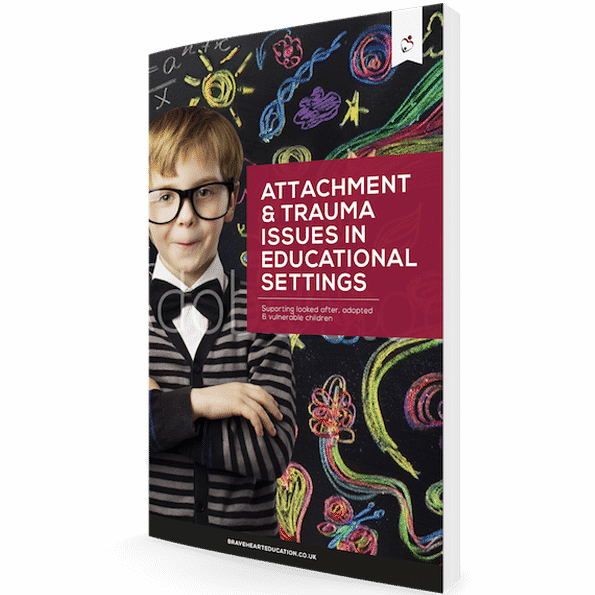
A few years ago, I created a small guide for Creating an attachment focused culture. This focused on what I am talking about in this blog – not just being trauma informed but transforming our cultures to accommodate more children and young people. If you would like a free digital copy of this guide, please email and I will send you one – nicola@bravehearteducation.co.uk.
So, my questions today, when someone mentions being trauma informed, is for you to consider the following;
- What has changed in policies and practice? i.e. is the language of being proactive and not reactive? Is there a relationship policy as opposed to a behaviour policy?
- Is the emphasis on the child managing their own behaviour or is their recognition of children and young people needing support to regulate?
- Are there ways of the child being allowed to regulate? i.e. can they take toilet breaks when they need? Are they having regular movement breaks? Are they being told to stop fidgeting or being enabled to find healthy ways to regulate themselves?
- Is the emphasis on relationship and connection over correcting behaviours? i.e. is time allowed for helping the child feel safe in the setting over a need for them to achieve academically?
This is not easy, I know that, and there are many pressures in schools that make this incredibly difficult. However, let’s be clear on what we mean when we say we are trauma informed. Has our learning about trauma and the impact changed the way we teach and the way we treat children and young people in our settings? It should do. If we are truly trauma informed it should transform our policies and practice.